The “bro-boost” story (and why it feels so familiar)
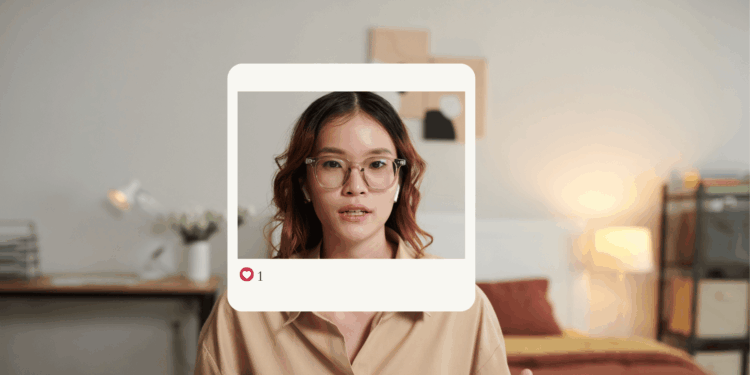
You’ve probably been seeing the posts, women switching their LinkedIn gender to male, tweaking photos and headlines, even “bro-coding” their content, only to watch their views and profile visits suddenly spike.
Others have created a post with a male colleague, each posting to their profiles only to witness the post on the male colleague’s feed travel further and faster, even though they were identical posts.
One Official, Hillary Robertson recently share in the HQ community, “I deleted my demographics rather than switch to male, and my reach skyrocketed within 2 days.” Experiences like Hillary’s highlight a truly disturbing issue, that LinkedIn and other online platforms have algorithms that disproportionately amplify the boost of male users over female users.
Intersectionality and the Internet: Not all digital bias is equal
And we have to say this clearly, this doesn’t land the same way for all women. Women of color, women with disabilities, and anyone living at the intersection of multiple marginalized identities often experience even harsher penalties in visibility, credibility and how their content is policed.
If that feels depressingly familiar, it’s because it is. Sexism at work is older than every platform we’re using. In the 1960s, Dame Vera Stephanie Shirley was a brilliant mathematician who wanted to keep working after having a child. So she did something radical, she banded together other highly qualified mothers who were stuck at home, and built a remote tech company doing serious work (flight software for Concorde, stock control systems, train timetables) long before flexible working was a buzzword. To get taken seriously in business, she signed her letters and would turn up to meetings as Steve Shirley, confronting sexism face-to-face.
It shouldn’t be lost on us that in 2025, women are still having to play similar games with their names, photos and profiles just to get their ideas seen but now it’s a digital game as well.
So… is LinkedIn sexist? As always, the reality is more complicated than a simple yes or no.
What algorithms and LLMs actually do with that history
Most modern platforms, including LinkedIn, use AI systems to decide what you see, and these systems learn from massive pools of historical data and user behavior.
That matters, because:
- LinkedIn’s job-matching algorithm has already been found to disadvantage women. MIT Technology Review reported that even when gender was removed from the data, LinkedIn’s system learned to favor male candidates because men tend to apply for jobs they’re less qualified for, while women typically wait until they meet almost all the criteria. The algorithm learned that behavior and amplified it, recommending more men for senior roles.
- Other companies have had to scrap biased AI entirely. Amazon abandoned an internal recruiting tool after discovering it was automatically downgrading resumes that contained the word “women’s” (as in “women’s chess champion”) because it had been trained on mostly male resumes.
The pattern is clear, AI systems don’t wake up one morning and decide to dislike women. They learn from a world that already undervalues women, and then they industrialize that bias at scale.
That’s exactly what Emma Wilson argues in her Is LinkedIn sexist? piece, what we’re seeing is less a single evil algorithm and more a messy interaction between data, design and human behavior, where platforms amplify the patterns they’re fed.
Behavior vs Code: The Visibility Paradox
One of Emma Wilson’s most useful distinctions is this, an algorithm can look sexist even if the rule itself isn’t to “prefer men.” You have to separate what the algorithm is trained to reward and how people behave towards different posters, who they click, trust, reply to, or quietly scroll past.
Research shows that men and women, on average, are showing up with different behaviors around confidence and risk. A gender-equality study found something important, on average, women score higher on verbal ability and altruism, while men score higher on risk-taking and self-esteem.
If you layer that over LinkedIn, a pattern starts to emerge:
- On the human side, women are more than equipped to write sharp, compelling content.
- On the platform side, LinkedIn quietly rewards behavior that looks like confident, frequent, self-promotional posting, the same kind of risk-taking and self-belief men are still more socially encouraged and forgiven for.
So we end up with this visibility paradox:
The issue isn’t that women don’t have the words. It’s that the system is tuned to boost the people most willing to push themselves forward, most often, in the boldest terms, behaviors men are still more likely, and more free, to lean into.
So when women see their posts underperform, it’s a sign that the platform is optimized for a style of visibility many women have been taught to dial down, and punished for when they don’t.
So… is LinkedIn sexist?
Here’s the framing I find most useful (borrowing from Emma):
The better question isn’t “Is LinkedIn sexist?”
The better question is: “Does LinkedIn amplify existing human biases, spam patterns and communication norms in ways that often disadvantage women, especially women at the intersections of race, disability, class and caregiving?”
Looking at the job-matching bias, the bro-boost experiments, and the under-representation of minority groups in ranking systems, it’s hard not to conclude that the answer is yes, that’s exactly what’s happening.
This is less a story about one evil platform and more a story about biased training data, biased platform incentives, biased social responses (who we choose to amplify, trust, hire, promote and quote).
When biased history trains modern systems, it’s no surprise the results keep landing harder on women.
What can you do about it? Especially if you’re an EA or admin.
We know that AI can and does pick up the worst of our offline habits and magnify them. We know women are not lacking in ability, ideas or words. We know that EAs and admin professionals are often the ones quietly holding organizations together, and that your voice is badly needed in public, not just behind the scenes.
We can’t fix this on our own, but we’re not powerless either. Here are concrete moves you can make, starting today.
At the bare minimum, we need to back ourselves more loudly and more often.
That looks like:
- Using more assertive, specific language about what you deliver (“I designed and led…” vs “I helped with…”).
- Positioning your role around strategic outcomes, not just tasks (“I own the exec’s schedule” vs “I manage his calendar”).
- Taking more calculated risks such as posting the opinion piece, sharing the story of a boundary you set, talking about measurable impact, asking for the raise or title change instead of waiting to be noticed.
From our conversations with assistants, this is the core mindset shift, moving from “support person keeping things afloat” to strategic operator whose judgment moves the business.
2. Plug into communities that treat your ambition as normal
In a room full of ambitious admins and assistants, things that might feel “too much” elsewhere, like talking about money, impact, boundaries, thought leadership, are baseline, not bragging.
That’s why, at The Officials, we encourage our members to treat their career like a business and the employer as their client. We teach them to better understand the service they provide and know the business case for each one of those services. It doesn’t cut it to say, “I check their inbox and reply to emails.” Administrative professionals need to use elevated language that properly articulates the business case for their role by instead saying something like, “I build and implement an inbox triage system that speeds up processing, prioritizes business-critical matters, reduces oversight risk, and delegates at every appropriate opportunity so the executive stays responsive and free to focus on high-value work.”
We want our community to know that they don’t have to rewire their relationship with visibility alone. In our weekly mentorship sessions, open to any administrative professional, Officials practice using agentic language, with support, so that it is easier to deliver it when to their “clients”, aka executives.
3. Use your voice and your vote
There’s also a policy and product side to this:
- In the UK, you can add your name to a petition calling for fair visibility for all on LinkedIn, pushing the platform to audit and address gendered outcomes in its algorithm.
- Tech companies, like LinkedIn, repeatedly say they care about their users and are committed to building the best platforms for them, meaning those users can hold them accountable by asking:
- How are you auditing your systems for gender and race disparities?
- How are you cleaning and rebalancing training data?
- How can creators challenge unfair moderation or reach drops and have that feedback fed back into the model?
Platforms are responsible for building systems that don’t silently punish women for existing, leading or talking about their careers and lives. We’re responsible for insisting on that, and for refusing to disappear quietly when the numbers don’t add up.
4. Be intentional about how you train the system
Finally, remember, your own clicks and comments are training data.
- Comment generously and substantively on women’s posts, especially those of women of color, disabled women and other marginalized voices.
- Share and save content that centers assistants’ expertise, not just their helpfulness.
- Challenge posts that recycle tired stereotypes (“just an EA,” “my girl who sorts out my chaos”) and instead amplify language that names the strategic nature of the work.
Small choices compound. If enough of us change what we reward, the signals going back into the system change, too
We discuss topics like this and how to show up as a leader in your workplace in our Weekly Mentorship Sessions. These sessions are free for all administrative professionals to attend and allow you to crowdsource advice and support from other hardworking peers.
We need your voice and would love to see you at our next session.