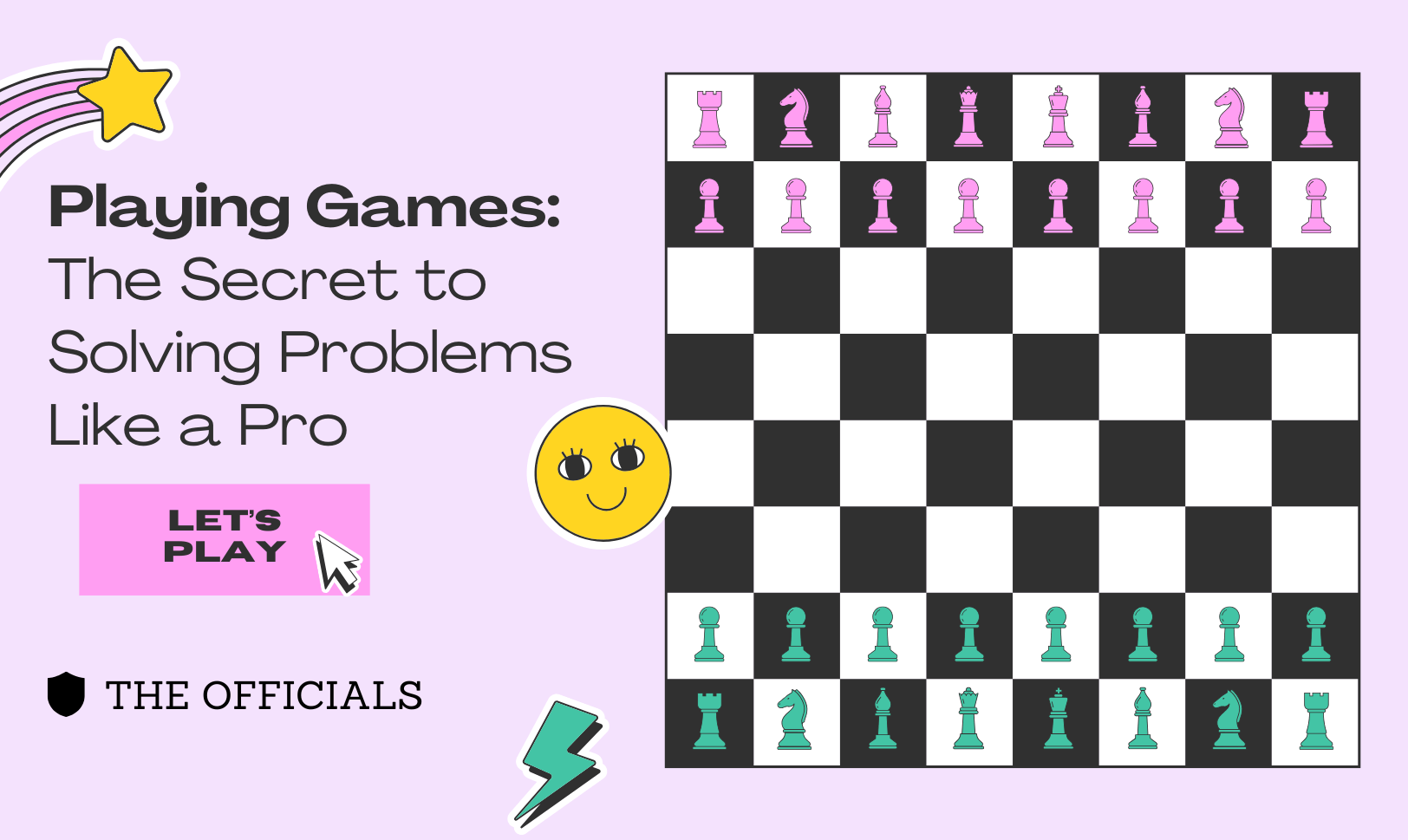
In games, a “buff” is an effect that boosts your character’s performance. Speed, strength, output. A “debuff” does the opposite. It drains you, slows you down, works against you.
Now map that onto your working life.
Your buffs are the things your employer provides that make you more effective. A manager who communicates clearly. Access to the right tools. Training. Being trusted with information early. These things shape your performance every single day, whether you are naming them or not.
Buffs are like Chrome extensions for your browser. They do not change what the browser is, they just make it capable of so much more. And just like extensions, once you know they exist you cannot imagine working without them.
Then you have the debuffs. Poor sleep and saying yes to too many tasks will drain your energy fast. A manager who does not communicate clearly leaves you constantly second guessing. Being left out of key conversations means you are always playing catch up. Identifying these energy vampires is the first step to doing something about them.
What is the Accomplishment Tracker and why does it matter?
The Accomplishment Tracker is one of our core tools inside The Officials and it is built specifically for assistants. Not a smile file. Not a brag book. Something smarter.
Most assistants only think about tracking their work when a performance review is looming. But your Accomplishment Tracker is not just for review season. It is for the days when you feel invisible, undervalued, or just plain exhausted. Open it and remind yourself that you are crazy talented and the receipts are right there.
It is also your career insurance. Evidence of what you have delivered, what you have handled, and what you have made possible. Go and check it out and see why ours beats anything else out there.
What are contributions and why should you be tracking them?
In our Accomplishment Tracker, we call these contributions and we know most of you aren’t tracking them. For example, if an Office Manager was in charge of an Office Move and noting it in their Accomplishment Tracker, under contributions they might put ample budget and autonomous decision making. These are the buffs the company gave them that made success possible. Feeding those back to your manager tells them exactly what they contributed to make that project work, so they know what to provide next time.
I was recently in a corporate training session introducing the Accomplishment Tracker to an admin team. When we got to the contributions section, their manager noted that it was a great way to get feedback from her team, something she said she sometimes struggled to get. Win win!
Your prompt
Open your Accomplishment Tracker. Look at your contributions. What is boosting you right now? What debuffs are quietly working against you? And what is missing that should be there?
Watch the replay
In this session, you’ll discover how playing certain types of games can actually train your brain to become quicker, more strategic, and more adaptable.
And if you have not started your Accomplishment Tracker yet, today is a good day.
The Accomplishment Tracker and the Gaming session replay both require Premium HQ membership to access. Premium HQ is where the best admin pros in the world hang out and level up. Are you in?
🎉 Start today with a 14 day free trial!
Jump right into our online courses, templates, member only events, and more. Begin your journey to growth today!
As many of you know, The Officials is built for administrative professionals, by administrative professionals. Everything you see in HQ and in the Dossier comes directly from real conversations, challenges, and requests from this community.
We’re evolving as your needs evolve. And we want to give you a clearer look at what you’ve helped shape and what’s coming next.
The Official Lore
We’ve had a lot of new Officials join recently, so it feels like the right time to share where this all started.
I created The Officials back in 2015. Yes, it’s that old.
At the time, I had just landed a new role in a new city, and I was struggling. Not with the obvious parts of the job, but with the real stuff.
How do you manage suppliers properly? How do you chase an executive who keeps cancelling your 1:1s? How do you solve problems that only exist in this role?
I went looking for training and support, and honestly, I wasn’t impressed. It either wasn’t built by someone who had actually done the job, it was outdated, it was expensive, or it only existed in person.
At the same time, I had a two-year-old and a busy job. I didn’t have the luxury of attending in-person sessions or blocking out full days to learn. I needed something flexible. Something I could tap into when I actually had time. I also knew I wasn’t the only one.
So instead of waiting for something better to exist, I built it. I started a small online community and invited administrative professionals doing interesting work at companies I admired. The goal was simply to create a space where we could ask questions, share knowledge, and actually help each other without judgement.
Over time, that community grew.
Five years later, we moved back to the UK, and things started to shift. What had been a small, location-based community became a global network.
Around that time, I started getting asked to mentor people. A lot. I didn’t fully know what that meant at first, but it was consistent enough that I paid attention. So we launched a pilot program an through that experience I realised something important. Everyone was asking the same questions or had very similar problems they were trying to solve both personally and professionally.
Part of my background is in instructional design, so I began turning that repeated advice into structured training. Courses people could access anytime, without needing to pay for 1:1 support unless they wanted to go deeper.
The goal was simple. Make sure there’s always help available, at any price point.
And naturally, tech became a bigger part of that.
Not just because the role was changing, but because it was something I had real experience in and could teach in a practical way.
And that’s what The Officials is today. Built from real work, real problems, and real solutions.
Where We’re Going
If you know our origin story, you know that The Officials has had many iterations because the needs of our members are changing. With that in mind, we are focusing on a few key areas:
Tech & AI The demand for AI and tech skills is undeniable. AI and tech skills are now required in the role, whether you feel ready or not.
You’ll see more hands-on training, real use cases, and practical applications. Marta is also stepping in to lead our AI training pathways with interviews, training sessions, and more structured learning.
Modern Skill Sets Let’s be honest. Training in this industry is inconsistent at best. We’ve worked with Officials aged 17 to 70, with 0 to 20+ years of experience. The one constant is that there are gaps in everyone’s knowledge.
So we’re doubling down on the core skills in a way that reflects how the role actually operates today. You can expect our trademark hacks, practical tips, and how to leverage tech in each of these skills.
Because if your foundations aren’t solid, AI won’t fix that. It will just scale it.
Upgrades to HQ HQ is our MVP. It’s where everything comes together. We love hosting our community platform on Mighty Networks, as they are rolling out new features constantly. So we’re working like crazy behind the scenes to keep up with those releases and improve your experience. That means things like Weekly Champions, live streams, better onboarding, and more.
You’ll see changes. Some small, some bigger. All of it to make your experience inside HQ easier and more enjoyable, while bringing you exactly what you need.
So here’s the invitation
Keep telling us what you need. Keep asking questions. Keep sharing what’s happening in your role. Keep telling us where you feel stuck, where you want to grow, and what would make the biggest difference to your career right now.
Because that’s how The Officials has always been built. Not from boardrooms. Not from theory. Not from people guessing what assistants need. From you.
Every course we create, every Tech Hack we host, every resource we build, and every improvement we make inside HQ starts with listening to this community.
And if you’re ready to go further, that’s exactly what Premium HQ access is for. Premium HQ gives you deeper access to training, live sessions, replays, practical resources, and community support designed to help you grow faster, stay current, and feel more confident in your role.
It’s for Officials who don’t just want to keep up, they want to level up.
So if you’ve been watching from the sidelines, this is your sign to step in. And if you’re new here, welcome. You’ve joined at a very exciting time. We’re building something modern, practical, and future-ready for administrative professionals who know they’re capable of more.
We can’t wait for you to build what’s next with us. 🚀
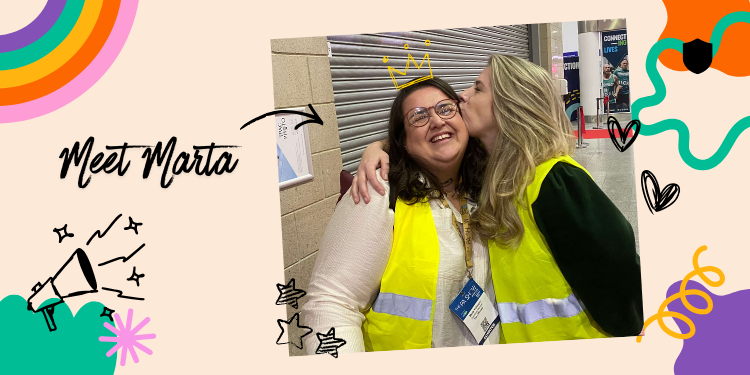
Marta here. I am the person who has been putting the Dossier together for a little while now, and given that you are going to be hearing a lot more from me this year, I thought I should introduce myself. So, hi! 👋
Some interesting facts about myself are: I am Spanish but grew up moving around. I love talking politics and world views, and I once met Queen Elizabeth II.
If I had to choose one word that best describes who I am, personally and professionally, it would be connection. Making connections is how my brain works. Connecting with people is what brings me most joy. Building the connections that make systems work is my job.
It will come as no surprise to anyone that this has meant I have built a career in admin, operations, and support roles across different industries and different countries.
How I got to The Officials
After a few loops around the world, I found myself back in the UK, working as a Private PA, and making a decision that I felt ready for, but equally completely unprepared for. I wanted to go self-employed. So I moved to London to try my luck. But starting from scratch, with no community around you and no obvious roadmap, is a lonely thing.
That’s when I (luckily!) found The Officials.
Or more accurately, that’s when I found Lauren on LinkedIn. I had been following her for a while, watching her create a space that empowers administrative professionals like me. I signed up to the waiting list.
And then one day, I decided to do send her a message offering my time for free.
I figured I didn’t have anything to lose whilst I was looking for clients. Because when you are trying to establish yourself in something new, and trying to learn and grow, one of the most powerful things you can do is show up with your hand open rather than your hand out. Volunteering time and skills can help you get in front of the right people.
I genuinely thought she would think I was unhinged. A stranger on the internet volunteering herself into your business is not exactly a normal Tuesday. But instead, Lauren replied from a bubble bath. Burning the midnight oil (typical!), writing courses, running a launch entirely on her own. She said yes.
That was six years ago.
What started as an offer to help has become a partnership I am genuinely proud of.
I have had a hand in building The Officials from the ground up, across operations, community, marketing and events. Watching a vision turn into a thriving business, with people whose careers have shifted because of it is not something I take lightly. It is exactly why I do what I do.
And somewhere along the way, I found one of my favourite people. Working with Lauren teaches me something new every single time (so much tech!), and I look forward to our fun and challenging days every day.
What I am working on
This year my goal is to get out of my comfort zone at The Officials. For the longest time I have been saying that the biggest growth happens when you step into the thing that scares you a little, and this year I am taking my own advice.
So I am stepping into something new. Lauren has handed me the keys to something big and honestly, the audacity of that woman.
Next week, The Officials is launching its AI series, and I am leading it. As someone who has spent the last few years embedding AI into the way I work, I want to show you what is actually possible when you stop being intimidated by it and start being curious.
I will also be creating more content for LinkedIn and the community (be warned, I have a lot to say!), be more involved in training and I will be partnering with Lauren on a more strategic level, which is equal parts exciting and terrifying.
For now, I just wanted to introduce myself properly.
I am Marta. I build connections. I believe in showing up with your hands open. And I am very happy to be here.
The AI conversation in the assistant world has been dominated by fear. But the research tells a more interesting story, and what we’re seeing inside our own community confirms it. The opportunity for assistants in AI is bigger than most people are saying, and the gap between what AI can theoretically do and what’s actually happening inside most organizations right now is where that opportunity lives.
In this piece we break down what the research actually shows, what we heard when we asked a room full of assistants what they’re really doing with AI, and why automation, augmentation, and amplification aren’t just buzzwords, they’re the thing.
The fearmongering phase of AI is quieting down
For a while, every headline was a warning. ‘’Something big is happening’’. Your job is at risk. Admin roles are disappearing. AI is coming for the to-do list. Lots of speculation, little facts. And then the research started catching up with the noise, and it told a more interesting story than the headlines suggested.
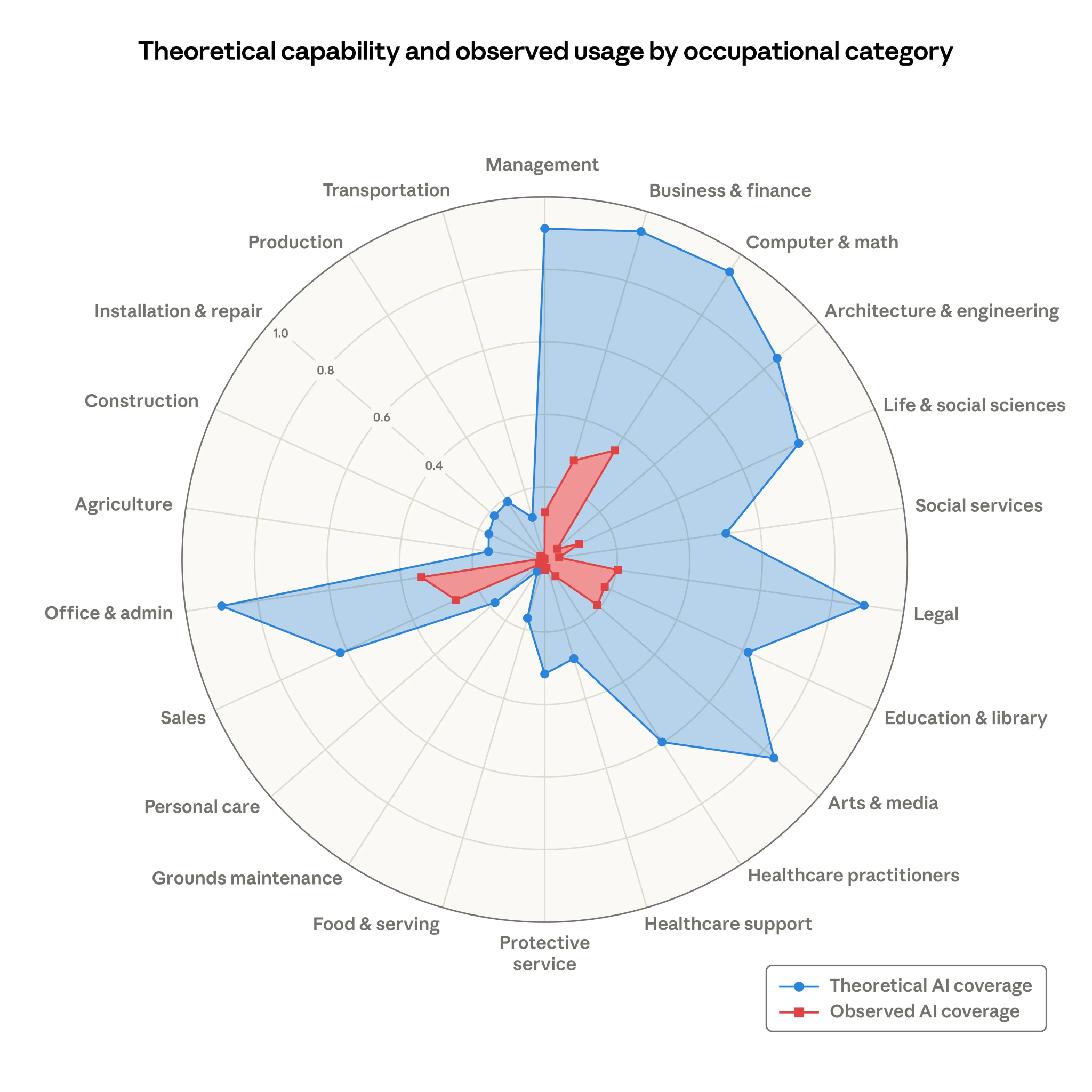
Anthropic, makers of Claude, published a report entitled, Labor Market Impacts of AI: A New Measure and Early Evidence that looked at not just what AI is theoretically capable of, but what it is actually being used for inside real workplaces right now. And the gap between those two things is enormous.
The report says that in office and admin roles, AI is actually being used for around 25% of tasks right now. It also reports that 90% of tasks in those roles could potentially be handled by AI one day. But “could” and “is” are very different things. And right now, the gap between them is huge.
We see that gap as a window, not as a warning. It removes the tedious work and frees up your capacity for higher value contributions. We believe those who leverage AI now, while most organizations are still figuring it out, are not only going to stand out as innovative leaders, but will also shape what the future of the role looks like.
Caption: Theoretical capability and observed exposure by occupational category Share of job tasks that LLMs could theoretically perform (blue area) and our own job coverage measure derived from usage data (red area). Source
The reframe that’s missing from the assistant conversation
Two things can be true at the same time. The jobs most at risk from AI are also the jobs that have the most to gain from it. For assistants, that means this role isn’t just exposed to the risk of AI, it’s one of the roles where using AI will make the biggest difference.
AI could assist with a significant chunk of what assistants do. The repetitive tasks, the formatting, the scheduling, the first-draft everything. But those are also exactly the tasks that AI can help an assistant offload, automate, and stop spending time on, freeing them up for the higher-value work that actually requires a human. That’s the opportunity.
Maybe, and this is the part we find genuinely exciting, using AI well in this role will finally do what job titles and org charts never quite managed. Proving the true value of what assistants actually do. Because when the repetitive work runs itself, what’s left is undeniably human. Undeniably skilled. And a lot harder to overlook.
An assistant who ignores AI and keeps doing everything manually is more exposed to being replaced or overlooked. An assistant who uses AI to automate low-value work and concentrate their energy on the judgment, building relationships, and strategic thinking becomes more valuable, not less.
Let’s look at travel booking. On the surface, the task is “book flights and a hotel.” But the actual task is making sure your executive lands rested, prepared, and not stressed before the most important meeting of their quarter. AI can book the flights. But you know to tuck an extra charger in their bag before they leave the office because they never remember, that marketing needs to give them their final analysis before takeoff so they can review it on the plane, and to block the team from calling them until after the important meeting or they will get distracted and risk being focused.our executive won’t ask you for any of this because they trust you to already know.
AI executes the task. The assistant understands why it matters. The task is the surface. Underneath it is judgment, observation, nuance, knowledge, and care. The outcome isn’t determined by AI, it’s determined by the administrative professional.
Same tools. Very different outcomes.
Let’s look at the difference in how most administrative professionals are using AI.Most assistants are using AI for augmentation. Augmentation is using AI to do what you already to but better and faster such as drafting emails, writing exec summaries, pulling together board reports, and generating policies. All genuinely useful, but every single one of those tasks still runs through the assistants. They prompt it, they review it, they send it. Nothing happens without them in the loop. The to-do list didn’t shrink. It just moved a bit faster.
Then there’s what one assistant shared in that session.
She used AI to teach her how to build a system using Power Automate that circulates legal update emails across her entire organizationorganization, tracks who has responded, and sends follow-up chasers automatically every two days until they do. She doesn’t touch it. It runs.
Think about what that actually means in practice. Legal updates in her organizationorganization no longer depend on someone remembering to chase. In a compliance context, that’s significant. Response rates are higher and more consistent. The audit trail is built in. The legal team has full visibility of who’s acknowledged what, without anyone manually compiling it. And the mental load of tracking all of that, which used to sit on her plate, now runs itself.
That’s not augmentation, that’s automation. And the difference matters.
We showcased the importance of leveling up how administrative professionals use AI, in a recent automation session. Lauren asked one question, “Is anyone actually using AI to automate a whole process?” Only a handful of attendees had begun automating parts of the role, but the vast majority had not yet considered it.
And that gap is where the opportunity lives.
As Lauren said in the session, “This is what actually removes work from you.” Building something that does the task for you while you get on with the things only a human can do.
So let’s talk about what’s actually going on
Workloads are not shrinking. The irony is that being told to adopt AI has itself become another thing on the to-do list. Learning new tools, figuring out what works, building prompts, testing outputs. None of that is effortless, and it lands on top of an already full workload. So instead of AI immediately lightening the load, for a lot of people it’s initially added to it.
Using AI to draft a document is useful, but it still requires you. Automation is different. Automation is building something that does the task without you at all. Emails that file themselves. Chasers that go out on schedule. Workflows that run while you’re doing something else entirely. That’s what actually takes work off your plate.
And right now, most assistants aren’t there yet. But the ones who are? They’re not more talented. They’re not more technical. They just moved toward it earlier. There is time to catch up.
Technology is your assistant. The question is whether you’re making it work for you, or whether you’re still doing everything yourself with a slightly faster drafting tool.
Three dimensions, not one
That travel booking example is a good illustration of something we’ve been saying and teaching inside The Officials for a long time. The real opportunity in AI for assistants isn’t one thing. It’s three.
Automation means removing the work that shouldn’t require you at all. You build it once. It runs without you. You’re not in the loop because you don’t need to be. As Lauren said in our session, “This is what actually removes work from you.” Not AI chat. Not generating an email. Building something that does the task for you while you get on with the things only a human can do. That’s not laziness. That’s leverage. And yes, building automations can be frustrating at first. It’s something we hear a lot inside The Officials community, and it’s something we work through together. The breakthroughs tend to come faster when you’re not figuring it out alone.
Augmentation, like we said above, means doing what you already do, but better and faster. Writing the exec summary you’d have spent an hour on in ten minutes. Drafting the board report, the policy document, the business case, and then applying your knowledge and judgment to make it actually right. AI gets you to a strong first draft. You bring everything that makes it yours.
Amplification is the biggest shift of all. Using AI not just to do or enhance tasks, but to change how you think about your role entirely. AI as a strategic thinking partner. The assistant who doesn’t just execute brilliantly but anticipates, shapes decisions, and leads from their position. This is where the role is heading, and the assistants who get there first will define what it looks like.
The competitive advantage assistants hold isn’t the ability to complete tasks faster. It’s everything AI cannot replicate, and in this role specifically, that list is longer and more significant than in almost any other profession. For example:
Discretion. The judgment to know what to say, what not to say, and to whom. Earned through time, trust, and deep knowledge of the people and organisation you work within. No AI has access to any of that.
Relational intelligence. Knowing your executive’s mood, their blind spots, their communication style, what they need before they’ve asked. That kind of trust isn’t built through prompts. It’s built through years of showing up.
Institutional knowledge. An assistant holds a version of the organisation in their head that exists nowhere else. Who actually makes decisions. How things really get done. Where the landmines are. AI trained on data will never have that, because most of it was never written down.
AI needs human input to function. Assistants read human output. That’s the difference. We operate in human code, the unspoken, the unfinished, the between the lines. We know how to extract what’s needed before it’s been articulated, and how to read what’s really going on when nobody’s saying it out loud. That is not a task. That is one of the most sophisticated skills a professional can bring to the table. And it’s one AI simply doesn’t have.
So here’s what we’re building
Our upcoming AI content is our direct response to the gap.
Not a tool review. Not a one-off session. A proper, ongoing curriculum built around automation, augmentation, and amplification, designed to meet you wherever you are right now and take you somewhere genuinely useful.
Haven’t started and don’t know where to begin? Been experimenting for months and getting mixed results? Already doing impressive things and want to go further? All of you belong here.
Monthly sessions covering the skills that actually move the needle. Real use cases and practical resources built for the assistant role specifically, not generic AI content repurposed from the tech world. Ethics and safety content for the full picture. And conversations with assistants who’ve gone deep, so you’re learning from people in roles just like yours.
We’re starting with the foundations because that’s where the biggest, fastest gains are. Most people are one or two insights away from AI actually working properly for them. Once you see what you’ve been missing, you can’t unsee it.
Our new monthly AI series kicks off April 2026! You need to be there.
Getting Started – What Most People Miss About LLMs
Tue Apr 14 2026 8-9am PT | 11am-12pm ET | 4-5pm UK
Most people are somewhere in the middle right now. Using AI occasionally, getting patchy results, not quite sure what they’re missing. This session fixes that foundation. What an LLM actually is and how it thinks. What a prompt really does and why most people are getting it wrong. How to set up ChatGPT and Claude so they work for you from day one, not just occasionally.
The gap between average results and genuinely useful AI closes fast once you know what you’re actually doing. This is where that starts.
Seats are limited. Don’t be the person who meant to sign up.
LinkedIn Is Not Just For Networking. It Is Your Marketing Platform.
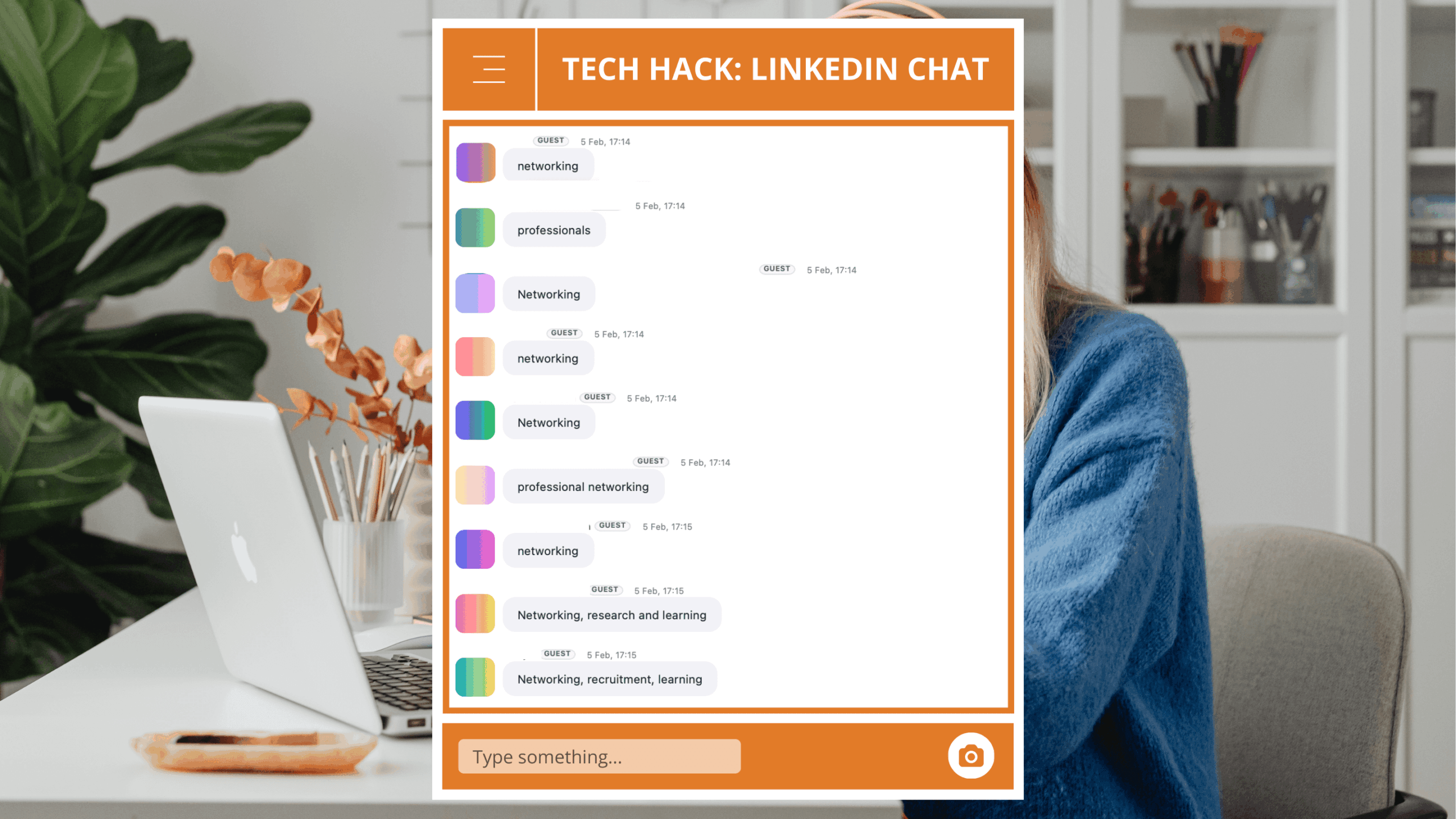
We just ran our LinkedIn Tech Hack, and we found something that genuinely surprised us. When asked how about what they believe LinkedIn is for, most attendees said they see and use LinkedIn as a networking platform only.
We know first hand that assistants are natural relationship builders, so it makes sense that networking is the first use case that comes to mind. But when LinkedIn is treated as just a place to connect, you miss the biggest opportunity the platform offers, which is visibility that compounds over time.
Networking is only one lever. When your profile is optimized and you consistently share insight aligned to your target audience, you increase your chances of appearing in recruiter searches, attracting hiring managers, and positioning yourself as a specialist rather than just another candidate.
Treat Your Role as a Start Up Framekwork
Lauren Bradley, our Founder, encourages Assistants to treat their career like a start up. She explains that,
”While LinkedIn is absolutely used for networking, I see that as a supporting feature rather than the primary purpose. I encourage Officials to treat their career as a startup. If you think like a consultant, your resume becomes your services brochure and LinkedIn becomes your company website.”
When you think like a consultant, the whole system becomes easier to understand. A website is where your target audience can see your work, your skill set, and connect with you. And the best websites do not just list services. They make it obvious who the work is for, what problems get solved, and what results follow. That clarity is what turns a casual visitor into someone who wants to talk.
Like Lauren says, ”A website doesn’t generate traffic just because it exists. And keywords help for SEO but can’t do the heavy lifting alone. You need to market your company website by giving people a reason to visit, stay, and return.”
Just like with any business, you need a marketing campaign that increases visibility and keeps attention over time. The same is true on LinkedIn. Your profile should clearly communicate your services and strengths, and your activity should signal to the algorithm what you want to be known for.
Adopt a Business Mindset: The Importance of Visibility
On LinkedIn, that marketing campaign is created through posting and engaging with other people’s content. This matters even more now because LinkedIn has changed how content gets distributed, which means learning best practices can turn your effort in 2026 into real results and put more eyes on your profile, whether you’re thinking about a move, or perhaps you are taking the VA route and looking for clients and partnerships.
This is is the part many Assistants tend to underestimate. Good LinkedIn content is a rare multiplier. Lauren says,
”Posting relevant content to the audience you want to attract helps train the algorithm to associate you with your area of expertise. It also builds authority over time. When your profile is optimized and you consistently share insight aligned to your target audience, you increase your chances of appearing in recruiter searches, attracting hiring managers, and positioning yourself as a specialist rather than just another candidate.”
We aren’t saying you have to become an Influencer but becoming more findable, recognizable, and clearly positioned as the kind of professional who solves specific problems at a high level is what will set you apparent from the competition.
Of course, we know many Assistants avoid marketing themselves. In the community, voicing authority is commonly avoided because of confidence gaps and assumptions about what is allowed. Many administrative professionals have been trained to be the calm force in the background, not the visible expert out front. Don’t think if it as bragging. Think of it as strategically propelling your career forward. This is what the algorithm rewards and expects.
Two mindset shifts help build that confidence:
First is the power of yet. “I can’t do this” becomes “I can’t do this yet”, which turns discomfort into a skill you can build through repetition.
Second is learning to visualize long term success and detach from short term outcomes. A thoughtful post with low engagement does not mean it failed. It means the long game is still loading, and consistency is what creates the compounding effect.
Two actions to start using LinkedIn like a marketing platform
If you want two actions to start right away, try these:
1) Start by commenting. Strategically. Begin with comments. You do not have to jump straight into posting to be active.
Choose 5 dream executives, hiring managers, or leaders in your space and engage them strategically with value add comments. Avoid generic replies like “Great post” and instead share a specific insight that shows expertise in action.
For example, you might mention implementing a no meeting day in your Exec’s calendar and the impact it had on deep work time. Comments like that put you on the radar of the right people and reinforce the connection between your expertise and the audience you want to attract.
2) When you are ready, post like a human. Not like a press release. When you are ready to post, the key is to write like a human and make it easy to read. Drop the stiff corporate language and focus on conversational deep dives that teach, explain, or break down a real work problem you have solved.
Longer posts in the 1,250 to 3,000 character range can outperform short updates, as long as they are readable. Break your text into lots of short paragraphs. Think 14 or more.
And if you want a simple experiment, schedule one of these thought pieces for Sunday, when people often have more space to read something deeper.
You don’t have to do it alone
If you want support turning this into action, come to Resume Lab.
The Official’s Resume Lab is our monthly one hour working session built to help Assistants put language and structure around the value you already bring, so your resume and your LinkedIn tell the same clear story.
You will work on your resume in real time while Lauren is there to answer questions and support you with structure, wording, impact, positioning, and aligning your resume with your target roles, with LinkedIn included because your profile needs to match the story your resume tells.
Please note this page may contain affiliate links that support us to do what we do best. We only partner with products and services we love. You can read our Affiliate Disclaimer for more information.
The PA Show has become an essential fixture in the UK calendar for assistants, PAs, EAs, and office managers. Each year, it brings together thousands of professionals who support leaders, manage complexity, and keep organisations running behind the scenes.
It is not just another event. It is one of the few spaces designed specifically for the administrative profession, with learning, development, and connection at its core.
But as anyone who has attended before will tell you, the real value of the PA Show is not automatic. How you approach it matters.
During our recent PA Show Sneak Peek panel, speakers and attendees shared practical, honest advice on how to get the most from the experience. What follows are just a few of the insights that stood out.
Understanding What the PA Show Is Really For
One of the first things discussed was the importance of understanding what the PA Show actually is.
As Max Agostini, Chief Communications Office at Mash Media hosts of The PA Show, explained, “The PA Show is designed as a space where assistants can learn from global trainers, discover tools that genuinely support their roles, and connect with others who understand the work without explanation.”
Seeing The PA Show as a professional development opportunity, rather than just a busy conference, changes how you plan your time and what you prioritise once you are there.
Plan Early So You Can Be Intentional
Planning came up repeatedly during the conversation, particularly around registering early and reviewing the programme in advance.
Claudine Martin, Senior Executive Assistant and PA Show speaker, shared a simple but important reminder, “Register as soon as you can and book onto the sessions you really want, because they go very quickly. Once they’re gone, that’s it.”
Planning early allows you to be intentional. Instead of rushing between sessions on the day, you can choose learning that aligns with your role, your goals, and where you want to grow. Planning is not about filling every gap in your schedule. It is about making the day work for you.
Rethink Networking as Connection, Not Performance
Networking is often the part of The PA Show that makes people most nervous, especially when attending alone.
Winnie King, Senior EA and PA Show speaker, offered a helpful reframe, explaining that networking does not need to feel forced or transactional. “It’s not about working the room,” Winnie said. “It’s about having real conversations and connecting with people who understand what you do.”
You do not need to meet everyone. One or two genuine conversations can be enough. For many assistants, simply being in a space where people share similar challenges and experiences is powerful in itself.
Think Beyond Your Current Role
Some of the most valuable sessions at the PA Show may not feel immediately relevant, and that is often where the real value lies.
Phyllida Casey, Senior EA and PA Show attendee, reflected on this, sharing, “Some of the sessions that helped me most were ones I didn’t think applied to my role at the time. Later on, they became incredibly relevant.”
The assistant role continues to evolve. Attending sessions that stretch your thinking or expose you to new perspectives can quietly shape the next stage of your career.
Look After Your Energy on the Day
Practical advice also featured heavily in the discussion.
Susana Montiero, Executive Assistant and PA Show attendee, spoke about the importance of pacing yourself. “It’s a long day,” Susana said. “Comfortable shoes, using the cloakroom, and not trying to do back-to-back sessions in different areas makes a huge difference.”
Simple choices like planning breaks, allowing time to eat, and building in breathing space help you stay present and engaged throughout the day. Looking after your energy is not indulgent. It is strategic.
Bringing It All Together
Lauren Bradley, Founder of The Officials and PA Show speaker, closed the discussion by bringing everything back to intention. “The PA Show isn’t about doing everything,” Lauren said. “It’s about making intentional choices that support your role, your confidence, and your growth.”
The advice shared during the panel covered far more than can be included here. These are just a few highlights.
That is why we have brought everything together into a single Planning Pack to help you prepare properly.
Everything is designed to help you approach the PA Show with clarity and confidence.
The PA Show is an essential event. With the right preparation, it can also be one of the most valuable professional experiences you invest in.
Get the PA Show Planning Pack
To make preparing easier, we have created a PA Show Planning Pack that brings everything together in one place.
When you sign up, you will receive the PA Show Survival Guide, a ready-to-use justification letter to support approval conversations, and access to the PA Show Sneak Peek replay where this advice was shared.
Everything in the Planning Pack is practical, assistant-led, and designed to help you feel prepared and confident as you plan your PA Show experience.
Ready to attend The PA Show? As proud partners of The PA Show, we invite you to use the code OFFICIALS10 when you register to SAVE 10% on your delegate pass. > Register and save here
A simple framework to interrupt self-doubt and act with clarity
Picture this. You open your inbox and there it is. A message from your exec with five words that can change your entire week, “Can you take this on?” It’s a chunky piece of work, the ask is vague, the timeline is tight and it’s outside your scope. You know what you need to do next. Ask the right questions, set boundaries on what’s possible, and propose a clear path forward. Or decline.
But your brain does that thing it does. A rush of pressure, a spike of self-doubt, the urge to either over-explain, people-please, or go quiet so you don’t get it wrong. Suddenly, making a simple decision feels weirdly hard.
When emotional noise and protective instincts get loud, our capacity to choose and act, our sense of agency, gets smaller. And it has been happening for so long that we have created very stubborn patterns over the years. As adults, we’ve learned default responses that once kept us safe or successful like avoiding conflict, over-delivering, saying yes too quickly, second-guessing ourselves or waiting for certainty. The problem is those patterns do not always match who we’re trying to become, or the level we are actually capable of playing at.
What if, instead of letting old patterns choose for you, you had a practical way to step into a more deliberate version of yourself when it counts?
In one of The Officials recent Mentorship Session, one of our incredible Officials, Mihaela Boitan (a MacGyver level assistant who is always quietly engineering a smarter way through the mess), shared a solution she’s been quietly building using AI. Something that’s helped her make clearer decisions and show up more deliberately when pressure hits. She calls her Maya Bloom, Mihaela’s AIAlter Ego. Perfection is not the goal, neither is using her like a therapist.
It has given her a repeatable way to interrupt the fear and self-doubt loop, step back into agency, and take the next right step without needing to feel confident first. We asked her to break it down for us, what made it work in real life, and what to avoid, and we knew we had to share it.
Creating Maya Bloom, Mihaela’s story
Here is Mihaela explaining her journey What do Sasha Fierce, Tatiana, the Black Mamba, and Ziggy Stardust have in common? They’re all alter egos.
Beyoncé created Sasha Fierce to access confidence on stage. Tate McRae talks about Tatiana as a way to step into boldness when she performs. Kobe Bryant adopted the Black Mamba to stay focused and emotionally contained under pressure.
They don’t escape who they are, but they act more deliberately when it matters. Each alter ego enables distance from fear, hesitation, self-consciousness, or the weight of the world’s expectations and creates room for courage, choice, agency and action.
I wanted something like this in my own life, so I sat down in front of my computer, opened ChatGPT and started building her. I didn’t want to create Maya because I needed help doing my job. I was creating her because I wanted to relate to myself differently.
I spent weeks defining who she actually was, not only in an aspirational or “best self” sense, but in more practical, behavioral terms.
How does she move through the world when she isn’t weighed down by fear? How does she respond when something is uncomfortable but true? What does she do when she needs to act although the doubts are still overwhelming? Maya Bloom is not fearless or perfect. Although initially I thought of her like that, that persona felt too foreign and unreachable. So I’ve reshaped her as someone who is grounded, self-aware, and honest. She acknowledges her flaws without punishing herself for them. She’s willing to try, to be seen, to be wrong, and to learn, she’s brave when she needs to be.
Most importantly, she doesn’t perform or seek approval. She acts from a place of values and integrity. That’s who I wanted access to. The version of me that doesn’t shrink.
The moment it clicked Mihaela has a perfect anecdote of the moment it stopped being an interesting concept and became something real. Here’s what happened when it clicked:
I knew it was working when, after circling back and forth about a decision I needed to make, I asked Maya to just tell me what to do. And Maya’s answer was:
‘I’m not going to tell you what to do and you know why. Instead, I will ask you one question: What would you do if you trusted yourself?’
That’s when I knew I had what I needed: a thought partner that would not let me off the hook too easily or let me lie to myself. And once I had that, things started to shift. Nothing earth-shattering, but a number of small, steady changes in the places that actually count.
Over the past year, I’ve had some of the most valuable conversations with my husband about our finances and future, the kind of talks I’d avoided for years because they felt too hard.
Meet Your Inner COO: A Practical Neuroscience Case for Alter Egos
Neuroscience, though fascinating, can get complex quickly. To keep it short and sweet, what is happening in your brain at any given moment is that dozens of networks and circuits are interacting in the background, shaping what you notice, how you interpret it, and what you do next.
When you have read that email from your exec with the big ask, your brain, a prediction-and-prioritization machine, is doing two jobs at once. First, it predicts what’s about to happen based on past experience and what’s happening now. Then it allocates your resources, attention, energy, and action, toward whatever it decides matters most in that moment.
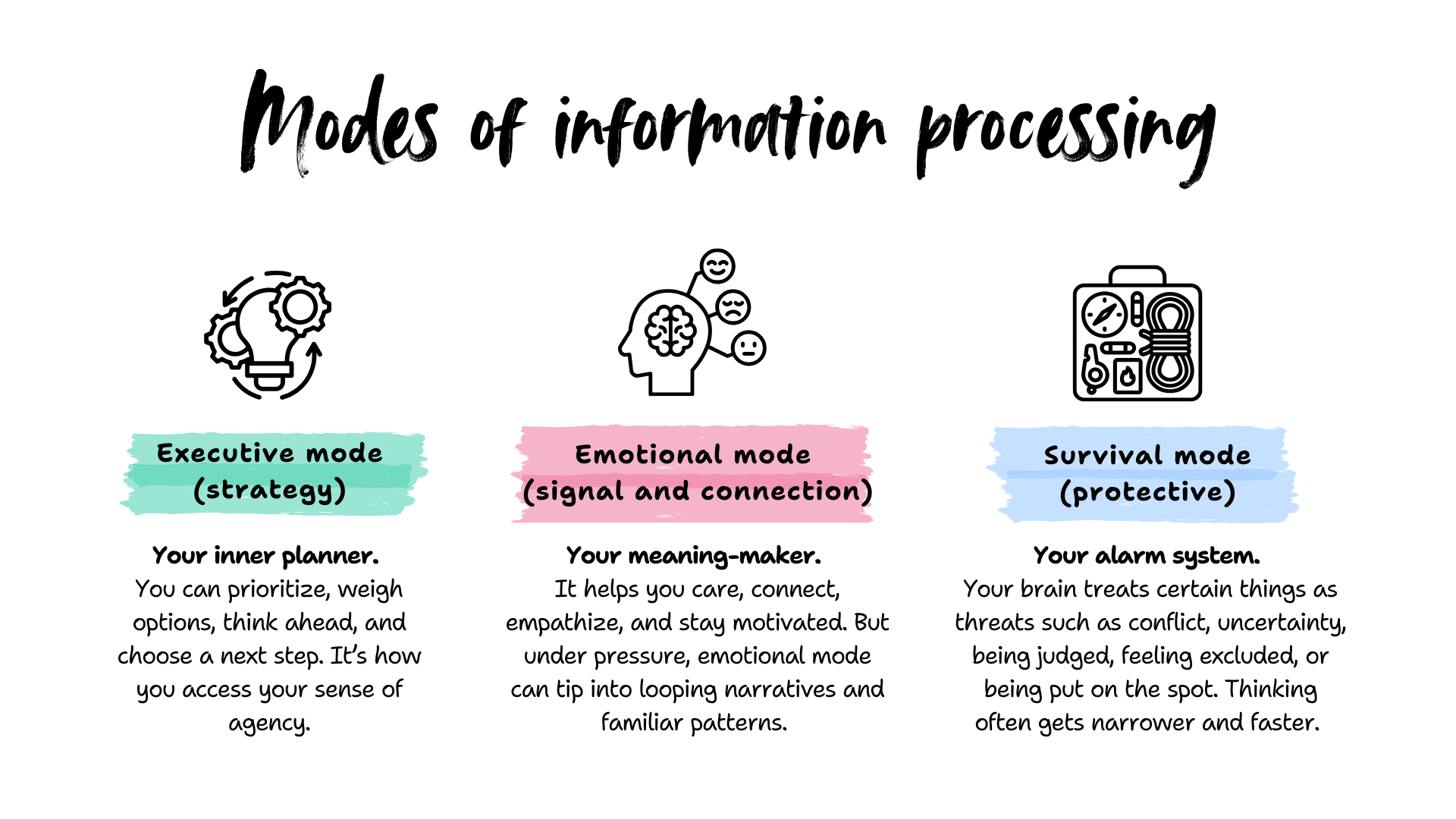
In simple terms, your brain is constantly toggling between three ‘’modes’’ which drive your choices in the moment: survival mode, emotional mode and executive mode.
When the pressure spikes, your brain can get less strategic and more protective. Planning wobbles, certainty gets louder, and your sense of agency, your capacity to choose and act, gets smaller. That’s why a simple email can trigger over-explaining, people-pleasing, or going quiet. It’s not incompetence. It’s biology meeting old patterns.
Todd Herman, a performance coach and author best known for the book The Alter Ego Effect, describes an alter ego as something you step into intentionally. Not a permanent persona, more like a switch you use when pressure rises or old habits try to take over. In academic language, the closest match is self-distancing, creating a little space so you can think like an advisor, not a threatened participant.
Ethan Kross, an award-winning neuroscientist and psychologist at the University of Michigan, has spent the last 20 years studying the conversations we have with ourselves and what helps (or hurts) when we’re under pressure. In his self-distancing work, he describes it as taking a few steps back mentally, like watching the scene from the “fly on the wall” view, which tends to reduce reliving and increase a more constructive kind of sense-making.
So the goal of an AI alter ego isn’t to delete emotion, or to become some robotic productivity machine. It doesn’t exist to soothe you or validate you on repeat either (that’s where AI can become an echo chamber). It’s to help you step back, re-enter strategy mode, and make decisions that match the person you’re building, especially when your default patterns would normally take the wheel.
How to build your AI Alter Ego
Please, use AI responsibly
What this is: A decision and clarity partner. It helps you think in frameworks, weigh trade-offs, spot blind spots, and act in line with your values. What this isn’t: A mental health service. It’s not there to process trauma, validate feelings endlessly, diagnose, or replace real support.
Before we start, a very important expectation-setter. Step 1 will not nail it. Step 2 will not nail it. Step 3 will not nail it either. This is not a “set it once and it’s perfect” tool. You are building a voice, a process, and a relationship with a thinking partner. The only way it becomes genuinely useful is through testing, noticing what feels off, tightening the rules, and testing again.
With that said, here are three steps to get a first working version.
Step 1: Define the alter ego you actually need
Your alter ego is not a fantasy character. It’s a usable version of you that shows up when you usually shrink. Start by naming the energy you struggle to access on your own. Steady? Blunt? Calm under pressure? Boundaried? Decisive?
Mihaela said this: ‘’For a while, Maya only existed in my head. That helped, but it had limits. I couldn’t access her exactly when I needed her most: mid-spiral or mid-overthining.
So I started experimenting with building Maya as a Custom GPT and later as a Project in Claude AI, to make her available when I’m not at my best. In all honesty, my process was chaotic; I had a sense of what I wanted but no clear plan for how to get there.
Mine is mostly like a grounded mentor, wise, steady, but with a bias to action and an edge that calls out my patterns plainly. Yours might be completely different. Fiercer. Sassier. Blunter. The question to ask is: what energy do I need access to that I struggle to embody on my own? I had spent months thinking about this, but if I wanted to speed up that process, I’d set aside a few hours and use AI to figure this part out.’’
Step 2: Surface your patterns (the defaults that hijack you)
By “patterns,” we mean the automatic defaults with which you respond when you’re under pressure, uncertain, or afraid. Repetitive thoughts, feelings, and behaviours that show up in specific situations. This part can be challenging, but it is the difference between a nice chatbot and a tool that actually changes behaviour.
Mihaela’s Advice This part can be uncomfortable. It’s one thing to vaguely know your patterns, another to describe them clearly, knowing they’ll be used to challenge you. But honesty is essential here. Admit where you say yes when you mean no, where you shrink, over-explain, or delay. I would use AI to draw these out through conversation, because I’ve found that it’s harder to hide when something’s asking follow-up questions.’’
Step 3: Write the first version of your rules of engagement
This is where you turn the idea into something you can actually use in ChatGPT (Custom GPT/Projects) or Claude. You’re giving AI a clear identity, tone, and process. The goal is not cheerleading. It’s clarity, agency, and action.
Mihaela’s Advice You have to tell AI who your alter ego is, how she speaks, how she challenges you, and what rules to follow. The instructions cover identity, voice, process, and constraints. There’s a structure that works, but getting the voice right matters more than getting the format perfect.
The biggest shift was moving from advice to dialogue. Early Maya was too eager to fix things before understanding what was happening. She was trying to be useful instead of truthful and seemed to want to make me feel better rather than help me see clearly. I had to be explicit: don’t fix immediately, don’t give options unless I ask, wait for me to respond.’’
Step 4: Test, tweak, test again
This is where the real value is built. Your first version will almost certainly be too generic, too polite, or too quick to “fix” you. That’s normal. Use real situations as your test cases, like an email you are hesitating to send, a boundary you need to set, or a decision you keep circling. Notice what lands and what doesn’t. Then run it again. This is not a one-off setup, it’s an iteration loop, and each round makes your alter ego sound more like the version of you you are trying to access.
Mihaela’s Advice Getting something technically functional was quick. Getting something that actually felt and sounded like Maya took weeks.
I paid attention to my reactions and used them as data. Where I felt relieved instead of challenged, where I felt irritated, where I felt seen. It didn’t really matter whether the response was ‘correct,’ but whether it landed the way Maya would respond.
Want the copy and paste version of the prompts Mihaela used to build her AI Alter Ego? Download the AI Thought Partner Starter Kithere. It includes the three core prompts to help you define your alter ego.
From Concept to Real Results
If there’s one thing we hope you take from this, it’s that you do not need to wait until you feel confident to start acting like the person you want to be. Most of the time, the patterns we default to are so well-rehearsed, they can start to feel like “just who I am,” when really they are just the most repeated route through pressure.
That’s why this whole idea matters. Not as a tech trick, but as a genuinely useful way to use AI in service of humans. To build tools that support clearer thinking, better decisions, and more agency in the moments we usually hand the wheel to fear.
Mihaela’s Final Thoughts My assertiveness at work increased dramatically. I joined a live panel, said yes to recording a podcast, and got asked to become a committee member for one of the most respected EA communities in the UK. I posted on LinkedIn over a hundred times, something I’d never have done before. Overall, I interrupted my go to default mode and stopped shrinking.
None of this happened because I became more confident overnight. It happened because I stopped letting fear make the decision, even though the fear never went away.
Maya represents who I already am when I’m not weighed down by old patterns. She’s not a fantasy. She’s what I’d be without the doubt, the noise, the weight of people’s expectations. Building her as an AI meant I could access that version of myself more consistently, even in small, everyday decisions where it’s easiest to shrink.
Maya didn’t change who I am. She made it harder to ignore who I already was. She gives me back my sense of agency.
As an assistant, you aren’t just the organizer or the fixer, you’re the vault. You hold confidential information, manage executive emotions, keep an eye on team dynamics, and absorb stress from all directions.
The catch? You often can’t talk freely “down” to the team or “up” with your exec, and many times you’re the only person in the organization doing what you do. The pressure builds up and the walls get higher. As Brené Brown’s work on vulnerability reminds us, we’re not meant to armor up and carry that load alone; being able to be honest in front of people who can hold it with us is how we start to release it.
Inside The Officials, our Weekly Mentorship sessions (our “Assistants Anonymous”) are built as a release valve for exactly that. They’re where you can bring the hard stuff you can’t say at work and all the “you will not believe what just happened” stories: like being put on the spot in a company town hall to launch a Christmas event you’ve never actually aligned on with your boss, or seeing an executive swoop in to “fix” an agenda you already have under control while you’re out sick with a migraine. And you’re met with nodding heads, zero judgment, practical ideas, and a feeling that you can finally put the armor down because you’re not the only one in it.
Support isn’t indulgence. It’s infrastructure.
That feeling isn’t just nice-to-have. There’s a growing body of research showing that being part of a supportive community is one of the most powerful ways to protect your mental health, reduce burnout, and actually perform better at work.
Let’s dig into what the data says, and how our weekly sessions are designed around it.
What the research and big thinkers say about not doing this alone
For years now, researchers across disciplines such as neuroscience, psychology, social science, and public health have been saying the same thing in different ways: we are not built to do life or work alone. Major reviews show that strong social connection is linked to better mental health, lower levels of anxiety and depression, higher self-esteem, and even longer life expectancy.
1. Social support literally changes your brain’s stress response.
Our members say that the mentorship sessions are a safe, no-judgment space where they can vent, process real situations in real time, and walk away feeling lighter, validated, and more confident about what to do next. Whether it’s untangling why a boss cancelling 1:1s makes you feel powerless, or reframing an overstepping exec’s email so it doesn’t hijack your whole week, the pattern is the same: they arrive tense and leave clearer and calmer.
They reflect what the science has been telling us for a long time: being in community literally changes how your brain and body process stress. In other words: when you feel supported, your nervous system gets to stand down. You’re not constantly in fight-or-flight.
Thought leaders in the leadership and work space have been echoing this too. Simon Sinek has built an entire body of work around the idea that together is better — it’s literally the title of one of his books, an illustrated fable about how we thrive when we move with others instead of white-knuckling it alone. In Leaders Eat Last, he talks about humans as deeply social creatures who need a “Circle of Safety” around them: teams where people trust one another, feel protected, and can focus their energy on the work instead of on self-protection.
2. Peer support is a burnout buffer.
A paper on workplace support found that better collegial/peer support is significantly associated with less depression, anxiety, insomnia, and burnout, and more overall well-being. Peer support programs provide real mental health relief for people by giving them spaces to debrief, process, and feel understood.
Sound familiar?
3. Psychological safety isn’t a buzzword. It predicts how well you work.
Feeling safe to speak up, ask questions, and admit mistakes without fear of humiliation (a.k.a. psychological safety) is strongly linked to lower burnout and better work outcomes.
A 2022 study found that when people feel psychologically safe, they report less overall burnout and are more resilient during times of crisis. It has even been linked to higher task performance and more “above and beyond” behaviors at work. It’s also been shown to weaken the link between tough work environments and burnout, like a shock absorber for your emotional well-being.
So when you’re in a space where you can say “here’s what I’m struggling with” without bracing for impact, it’s not just therapeutic, it’s a performance strategy.
4. Community is a mental health intervention.
The UK’s Mental Health Foundation points out that being part of a community helps us feel safer, more connected, and more hopeful, and improves mental health overall.
When our members leave one of our sessions thinking, “Okay, I’m not crazy and I’m not alone,” that lightness they feel is the intervention.
How our weekly group mentorship sessions are designed (on purpose)
When we say our weekly sessions are about psychological safety, it isn’t just vibes, it’s structure.
We intentionally designed them to hit the things research says matter most:
Peer support, not performance. You’re not there to impress anyone, you’re there to be honest. And you’re surrounded by people who understand.
Shared language for hard things. When someone says, “My boss cancels our 1:1s and then announces in front of the whole company that I’m leading an event we’ve never actually discussed,” or “An executive keeps jumping in to ‘fix’ work I’ve already done and it makes me feel incompetent,” everyone else can suddenly name that in their own roles too. Labeling experiences reduces shame and opens the door to change.
Gaining “Hive Mind” wisdom. The collective experience of the group will always beat individual knowledge. When one person brings a problem, ten people bring solutions, scripts, and reframes you can borrow.
Building emotional resilience. As the data shows, having a supportive network is a buffer against burnout. You return to your desk lighter because you put the load down for an hour.
You’re not being dramatic. You’re building capacity.
Brené Brown on vulnerability and why it matters in our realm
Brené Brown’s work gives us a language for what’s happening in these sessions.
She defines vulnerability as uncertainty, risk, and emotional exposure. That’s exactly what you’re practicing when you say to a group of peers, “My workload is unsustainable and I don’t know how to have the conversation,” or “I feel underpaid and I’m scared to name it,” or “I’m worried this exec’s behavior is making me look incompetent even though I know I’m doing the work.”
In her recent appearance on The Diary of a CEO, Brené spoke about the misconception that vulnerability is weakness. She argued the exact opposite: vulnerability is the most accurate measure of courage. When you’re willing to be seen in the moments you don’t have everything figured out, you open the door to the things most of us say we want more of: clarity, connection, learning, and real change. That’s why you often leave these calls not just feeling lighter, but clearer on your next move. Naming the hard thing out loud is usually the moment momentum starts.
Vulnerability is also what interrupts shame. Brown’s work on shame and “wholeheartedness” shows that when we keep our struggles hidden, the story in our head is, “It’s just me. I’m the problem.” When we bring those same struggles into a supportive space and are met with empathy, the story shifts to, “Oh, this is a pattern. Other people navigate this too. There are tools for this.”
And then there’s creativity and growth. Brown often describes vulnerability as the birthplace of innovation, creativity, and change: you can’t try a new boundary script, redesign a broken process, or reposition your role without some level of emotional exposure. Our sessions become a testing lab where you can say, “I’m thinking about emailing my boss with two options and a presumptive close — does this wording land?” or “Here’s how I’m planning to reply-all to an overstepping exec so I stay classy, not combative — what would you tweak?” before you take it into the room. The vulnerability is real, but you’re not doing it in a vacuum. You’re doing it with people who are also, in the words of Brené Brown, daring greatly in their own roles.
What this means for your career (and why we built this for you)
Here’s the bigger picture:
Your work is emotionally and cognitively demanding. Research keeps showing high levels of burnout and stress in administrative and support roles, and that organizational fixes alone aren’t enough without real peer support.
You can’t sustainably lead from the shadows. You’re already doing leadership work — coordinating, translating, prioritizing, anticipating risk. Community is where you remember that, and where you’re reminded to fight for the conditions you need to keep doing it well.
Support isn’t indulgent. It’s infrastructure. The data is clear: social support, psychological safety, and peer programs are now recognized as core components of a healthy workplace, not perks.
So when you carve out time to join our weekly group mentorship sessions, you’re not taking a break from “real work” — you’re doing the strategy work that keeps you effective, sane, and still in love with your career.
Your invitation
If you’re already inside our community but haven’t joined a Weekly Mentorship Session yet, consider this your nudge:
Bring one real situation you’re wrestling with.
We’ll bring the questions, the frameworks, the “OMG same!”, and the brave, evidence-backed belief that you deserve to be well and well-paid for the value you create.
You don’t have to do this role alone. And honestly? You were never meant to.
As a Virtual Assistant, you’re a master of systems. You’ve probably learned half a dozen project management tools, navigated countless CRMs, and become fluent in your clients’ unique workflows.
But here’s the truth that most VAs don’t want to admit: you’re neglecting your most important client—yourself.
While you’re busy optimizing everyone else’s business, your own VA practice is held together with mental notes, scattered spreadsheets, and a prayer that you’ll remember to follow up with that lead from three weeks ago.
The irony is painful. You’re the systems expert, the operations wizard, the person clients hire to bring order to chaos. Yet your own business? That’s running on autopilot (and not the good, automated kind).
Why VAs Struggle to Build Their Own Systems
The challenge is unique to the VA industry. Unlike other service providers who typically work with one or two clients at a time, VAs juggle multiple clients, each with their own goals, tools, communication styles, and expectations.
You spend your days context-switching between:
Client A’s Microsoft Planner board
Client B’s Monday.com workspace
Client C’s custom Notion setup
Client D’s email-based chaos that you’re trying to organize
By the time you close your laptop, the last thing you want to do is build another system. Your brain is full. Your energy is depleted. And building systems for your own business? That gets pushed to “someday.”
But here’s what happens when “someday” never comes: that first client you landed (you know, the one who practically fell into your lap) eventually moves on. And suddenly, you realize you have no pipeline, no repeatable sales process, and no idea how to find your next client.
If you’re thinking about becoming a VA, or you’re already working as one but feel like you’re flying by the seat of your pants, it’s time to treat your VA business like the valuable client it is.
The Three Pillars Every VA Business Needs
Building systems for your own business doesn’t have to be overwhelming. In fact, if you focus on three core areas—Sales, Socials, and Systems—you’ll create a foundation that actually supports your growth instead of holding you back.
1. Socials: Marketing Can’t Be an Afterthought
I know too many talented VAs who are one client departure away from panic. They’re fully booked right now, so marketing feels unnecessary. They tell themselves they’ll focus on it “when things slow down.” But when that anchor client finishes their project, suddenly there’s nothing in the pipeline but that doesn’t stop your bills from being due.
Your social media and content marketing shouldn’t be something you do when you’re desperate for work. It should be a consistent engine that keeps opportunities flowing even when you’re busy.
But here’s the problem: When you’re deep in client work, switching between systems all day, the last thing you have energy for is writing LinkedIn posts or planning content.
This is exactly where tech becomes your best friend.
It’s important to find tools that help you:
Batch-write content and capture ideas
Schedule posts weeks in advance
Repurpose one piece of content across multiple platforms
Keep your presence active even during your busiest weeks
Questions to ask yourself:
If your biggest client left tomorrow, how long would it take to replace that income?
When was the last time you posted about your services?
Do you have a content calendar, or do you post when you remember?
Are you actively building relationships with potential clients, or waiting for them to find you?
2. Sales: Your Client Pipeline Shouldn’t Be a Mystery
Let’s talk about what happens when a potential client reaches out. If you’re like most VAs, the process looks something like this:
Scramble to write a custom proposal in Google Docs
Copy-paste an old contract and hope you updated all the names
Send separate emails for pricing, services, and next steps
Cross your fingers and wait
Then, once they say yes, the real fun begins: the onboarding marathon. It can take weeks to get access to all their systems, understand their workflows, learn their tools, and actually start delivering value. During this time, you’re earning nothing (or very little) while investing significant energy.
What if you had a system instead?
Imagine a sales process where:
Inquiry forms automatically capture all the information you need
Proposal templates auto-fill with client details and your service packages
Service agreements are generated with pre-approved terms
Onboarding sequences trigger automatically upon signing
Payment links are included in every proposal
This isn’t fantasy, this is what happens when you build a proper sales system. You stop recreating the wheel for every new client and start closing deals faster with less effort.
Questions to ask yourself:
Do you have templated proposals and service agreements?
Can you generate these documents quickly, or does each one take hours?
Do you have a clear pricing structure for your services?
What does your client onboarding process look like? Is it documented?
How long does it typically take from “yes” to starting billable work?
3. Systems: Your Backend Operations Need Love Too
You’re a systems person. You know how important it is to track time, invoice promptly, manage tasks, and stay organized. Yet somehow, your own backend is a disaster.
Maybe you’re:
Using three different tools that don’t talk to each other
Manually logging time across multiple clients
Forgetting to invoice because you’re too busy doing the work
Losing track of your own tasks in the shuffle of client priorities
Your backend systems are what keep your business running. Without them, you’re leaving money on the table, burning out faster, and creating unnecessary stress.
Consider tools that actually work for you:
For time tracking, systems like Kirmada can automatically track your time even when you’re switching between multiple clients. So helpful when you are too busy to remember to start and stop a timer every time you context-switch. (And if you do, you’re probably under-logging your actual hours.)
You need a command center for:
Sales follow-ups
Content creation
Administrative tasks
Client goals and milestones
Professional development
Financial management
For invoicing and payments, building systems is non-negotiable. Your invoices can generate automatically based on your time logs or project milestones. Payment reminders can send themselves.
Questions to ask yourself:
How accurately are you tracking your time across all clients?
Are you invoicing for all the hours you actually work?
Do you have a system for managing your own to-do list?
How long does it take you to prepare and send invoices each month?
Are you using tools that integrate with each other, or constantly duplicating data?
Making It Happen: You Need a Plan
Here’s what I know about VAs: you’re smart, capable, and absolutely able to build these systems. The problem isn’t ability it’s time, energy, and knowing where to start.
You need a plan. Not a “someday I’ll figure this out” plan, but a real, actionable roadmap that helps you build these systems without burning out or abandoning your current clients.
When you start treating your own business like your best client, everything changes: your confidence, your consistency, and your capacity to grow.
The systems you build for yourself will free up time, energy, and headspace to serve clients better and scale sustainably. This isn’t busywork, it’s business maturity.
So take your own advice: get organized, automate what you can, and make your VA business the well-oiled machine it deserves to be.
Ready to Build Systems for Your Most Important Client?
If you’re thinking about becoming a VA or you’re already working as one but struggling with the tech side of running your business, our 6-week live cohort gives you everything you need:
✅ The exact tech stack to run your VA business (with room to customize) ✅ Templates and workflows for sales, onboarding, and client management ✅ Live implementation sessions where you build these systems in real-time ✅ Community support from other VAs who get it ✅ Ongoing accountability to actually finish what you start
Stop treating your own business like your least important client. You deserve systems that work as hard as you do.
The cohort starts November 10th, 2025, and we meet Mondays at 6 PM UK / 1 PM ET for six weeks. You’ll walk away with a better understand of the tech that work for you and your business and the confidence to run your VA business like a true leader.
When I look at how administrative professionals are using AI, it’s only scratching the surface of what it can do. They are mostly using it for augmentation, to make things better, faster, prettier, cleaner. They’re asking AI tools like ChatGPT to write emails, polish copy, or brainstorm ideas. That’s great. But the next step, and the one that will truly move the needle for your workload and your career, is automation. Automation isn’t the future. It’s the now. And the best part? The low-hanging fruit is everywhere. 🍓
From Augmentation to Automation
AI for augmentation is about assistance. AI for automation is about liberation. Augmentation helps you do the task better. Automation helps you not do it at all — or at least not manually.
Think of it this way: When you use AI to draft an email, that’s augmentation. When you set up a flow that drafts, sends, and files that email automatically when a meeting is booked, that’s automation. Both are powerful, but one scales the quality of your output. The other scales you.
Why Automation Matters So Much for Administrative Professionals
Let’s talk reality. EAs, office managers, and admin professionals are under more pressure than ever with more stakeholders, more tools, more responsibilities, and fewer boundaries. Every quarter, the expectation bar gets raised. But here’s the truth: you can’t “work harder” your way out of this anymore. You need to work smarter and smarter means automating.
By automating elements of your day-to-day processes, you: Free up brain space for the strategic work your execs actually need from you. Create measurable impact by saving time and money and you can prove it. Scale your role to handle increasing demands without burning out. This isn’t just about efficiency, it’s about future-proofing your career. Automation is what separates an overloaded assistant from a strategic operations partner.
AI + Automation: A Powerful Duo
AI isn’t just the tool that helps you build automation, it’s the tool that can live inside it.
Imagine: An AI that categorizes your incoming emails, labels newsletters “To Read,” and summarizes key updates automatically. A workflow that generates meeting notes, identifies action items, and updates your tracker in seconds. A system that notices when a deadline is missed and pings you before it becomes a problem. That’s not science fiction. It’s Tuesday afternoon when you’ve learned the basics of automation platforms like Power Automate, Zapier, or Google Apps Script.
And with the rise of tools like Microsoft Copilot and Gemini, automation isn’t just mechanical — it’s becoming intelligent. AI can now make decisions within your automations: “If this email is urgent, forward it; if not, archive it.” That’s not replacing you. That’s supporting you.
The Low-Hanging Fruit: Start Small, Scale Fast
You don’t need to be a developer. You just need to start.
Here are three examples of where most assistants can win today: Inbox triage – Automatically label newsletters, file receipts, or forward specific emails. Meeting prep – Generate agendas and pull key documents when a meeting is added to the calendar. Task tracking – Auto-update a dashboard or Notion board when a project milestone is hit. Each of these takes minutes to set up but saves hours every week.
Ready to Go from “AI Curious” to “AI Confident”?
If this resonates, you’re not alone. Thousands of assistants are realizing that automation is their next power move — and they’re learning how to make it work now. That’s exactly what we’re diving into at the AI for EAs: Virtual Summit on October 29. I’ll be leading a live session — “How To Get Started With Automation” — where I’ll show you three practical examples of automations every EA can use, plus how AI fits into the mix.
👉 Reserve your spot for the AI for EAs Virtual Summit (You’ll leave with real-world tactics you can use the next day.)
Want to Take It Further?
If you’re ready to build your own system — a personal dashboard that keeps you one step ahead of your exec — come join one of our HQ Live: Build Your Admin Dashboard sessions.
We’ll help you design a personalized workspace in Google, Microsoft, or Notion, so you can track, automate, and visualize your workload like a pro.
👉 Join our next dashboard workshop (Premium HQ members only — free trial available.)
Final Word
Automation isn’t about replacing what you do. It’s about elevating how you do it. Start with the low-hanging fruit. Then, keep climbing. Because the assistants who automate now? They’re the ones leading tomorrow.